
WELCOME BONUS 300%
UP TO €2000 + 100
FREE SPINS
UP TO €2000 + 100
FREE SPINS
Home → Blackjack
Blackjack at Arctic Casino: Variants, Rules and Payouts
Check table limit before the first bet
Before commencing play at Arctic Casino, it is crucial to ascertain the betting limits for each table, particularly when engaging in mobile gameplay. For instance, Live Lightning Blackjack, provided by Evolution, features a broad betting range from €1 to €2,500, accommodating a wide spectrum of player preferences and bankrolls. This ensures players can align their wagers with their predetermined budget and risk tolerance before committing to any hand.
Understanding these limits is paramount for strategic session management. While Lightning Blackjack offers unlimited players, the maximum stake of €2,500 per hand directly impacts the potential exposure per round. Players should consider how this limit interacts with the game's RTP of 99.56%, ensuring their betting strategy remains sustainable throughout their mobile gaming session.
Failure to verify table limits prior to placing an initial bet could lead to exceeding personal financial boundaries, especially in a fast-paced mobile environment. For example, a player might intend to bet €50 but inadvertently place a €500 bet if they have not confirmed the €2,500 maximum, impacting their ability to participate in subsequent hands or rounds.
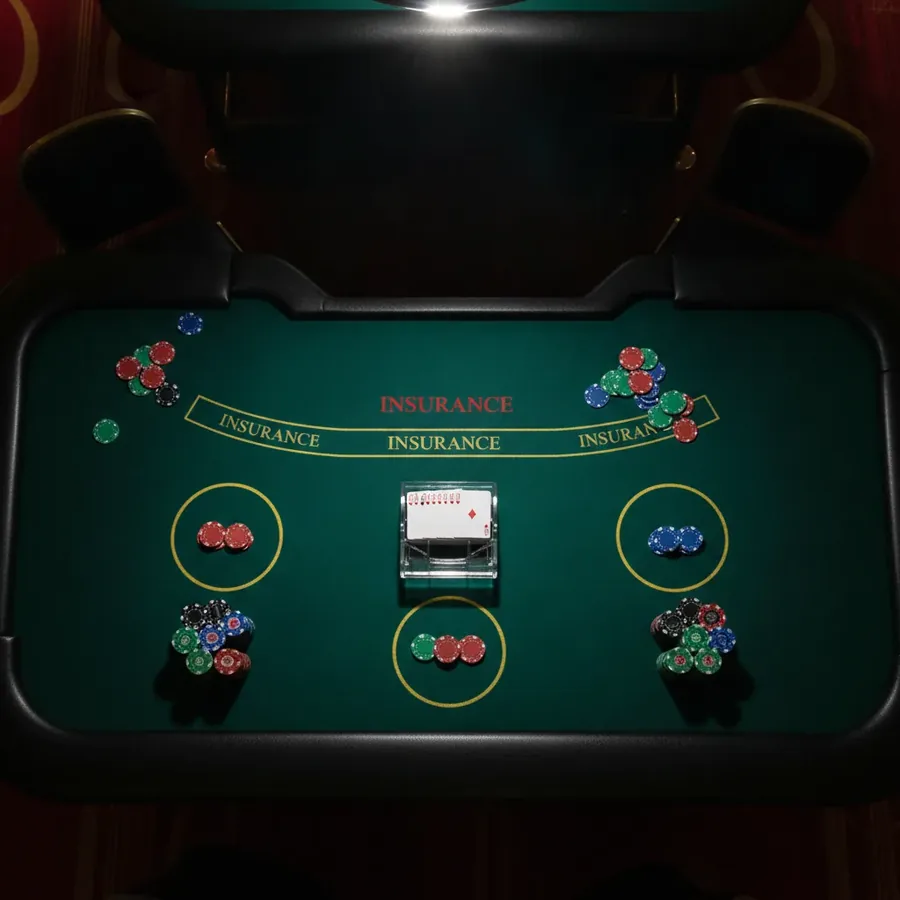
Place Side Bet before cards are dealt
When participating in mobile blackjack at Arctic Casino, any side bets, such as Blackjack Insurance, must be placed before the dealer's cards are dealt. For example, Blackjack Insurance, a side bet available when the dealer shows an Ace, typically pays 2:1. However, its RTP is a low 92.53%, making it generally advisable to avoid based on basic strategy, particularly in a mobile context where quick decisions are made.
The timing of side bet placement is critical for eligibility and fairness across all game variants, including those found at live tables. In the context of Lightning Blackjack by Evolution, while no specific side bet is detailed in the provided data, the principle remains: any optional wagers must be initiated before the commencement of play. This prevents players from reacting to initial card distributions.
Placing a side bet after the cards have been dealt would invalidate the wager and potentially lead to disciplinary action from the casino. For instance, attempting to place an insurance bet after seeing your hand and the dealer's upcard would be rejected, as the game's rules, enforced by the platform, dictate that such bets are a pre-deal proposition for all players, including those on mobile devices.
What doesn't count towards turnover at 10 percent?
When utilizing bonuses at Arctic Casino, particularly on mobile, it is essential to understand how different game types contribute to wagering requirements. Table games, including various blackjack variants, generally contribute only 10% towards the turnover requirements. This means for every €100 wagered on a table game, only €10 counts towards fulfilling the bonus conditions.
For example, if a player accepts the 300% welcome bonus up to €2,000 plus 100 free spins, and they play Blackjack Liberal Vegas Strip (RTP 99.72%, House Edge 0.28%), the turnover calculation is significantly impacted. A €1,000 bet on this blackjack variant would only reduce the wagering requirement by €100, making it a slower path to unlocking bonus funds compared to slots.
This 10% contribution rate is a standard condition for table games and applies to all blackjack variants available at the casino, including live dealer options like Quantum Blackjack Plus Live by Playtech (RTP 99.57%). Players must be aware that focusing solely on table games for bonus wagering can substantially prolong the time and amount of money required to meet the full turnover, potentially affecting their ability to withdraw bonus winnings.
Clicked Too Late: Hand Is Automatically Held
In the fast-paced environment of mobile online casinos, quick decision-making is paramount, especially in card games like blackjack. If a player at Arctic Casino fails to make a timely decision regarding their hand, such as hitting, standing, splitting, or doubling down, the system will automatically execute a default action. This ensures the game progresses smoothly without undue delay for other players.
For instance, in a game like Blackjack Ein Deck (RTP 99.85%), where decisions are critical for optimal play, a delayed input could result in the hand being held. Basic strategy dictates specific actions based on the player's hand and the dealer's upcard. If a player hesitates for too long, the software will typically default to standing, potentially leading to a suboptimal outcome compared to their intended strategy.
This automatic holding mechanism is a standard feature designed to maintain game flow, particularly on mobile platforms where connectivity or user interaction speed can vary. Players must be mindful of the time limits for each decision; missing the window means surrendering control of that specific hand's progression to the automated system, thus forfeiting the opportunity to implement their chosen strategy or a specific bet modification.
Latency under 2 seconds at the live table
When engaging with live dealer blackjack games at Arctic Casino on a mobile device, the platform aims to provide a responsive experience with latency under 2 seconds. This low latency is crucial for games like Evolution's Blackjack Party, which features two hosts and a lively atmosphere, ensuring that player actions are registered and reflected in real-time. Such performance is critical for maintaining the integrity of the game.
This low latency is particularly important for games with rapid progression or special features, such as Lightning Blackjack with its multipliers up to 25x, or Playtech's Quantum Blackjack Plus Live with multipliers up to 1,000x. A delay exceeding 2 seconds could mean a player misses an opportunity to place a bet, take advantage of a multiplier, or even see their hand dealt incorrectly relative to the dealer's actions.
Ensuring a connection speed that supports sub-2-second latency is therefore a prerequisite for an optimal live blackjack experience. Players experiencing consistent delays above this threshold may find their gameplay compromised, leading to frustration and potentially missed opportunities. It highlights the importance of a stable internet connection when participating in real-time casino games on mobile devices.
Blackjack variants at a glance
| Variant | Payout | House edge | Rule | Bet range |
|---|---|---|---|---|
| Blackjack Split / Double / H17 – Regel-Effekte | n.a. (Regel-Modifikatoren) | H17 +0.22 Prozentpunkte; RSA −0.08 Prozentpunkte; DAS −0.14 Prozentpunkte | Dealer Hits Soft 17 verschlechtert RTP um 0.22 Prozentpunkte; Resplit Aces verbessert um 0.08 Prozentpunkte; Double After Split verbessert um ca. 0.14 Prozentpunkte; 6 Decks statt 8 – ca. 0.02 Prozentpunkte. | Double – Einsatz ×2 mit einer Karte; Split – bis 4 Hände; Ass-Split meist mit einer Karte. |
| Blackjack Liberal Vegas Strip (liberale Regeln, 3:2) | 99.72% | 0.28% | Günstigste Regelkombination: S17 + DAS + Resplit + Late Surrender. Standardabweichung 1,15 | Blackjack 3:2, Gewinn 1:1 |
| Blackjack Surrender (Late Surrender) – Regel-Effekt | n.a. (Regel-Modifikator) | −0.08 Prozentpunkte | Spieler gibt Hand nach Dealer-Blackjack-Prüfung auf, verliert die Hälfte des Einsatzes. Verbessert RTP um ca. 0.08 Prozentpunkte. Early Surrender ist wesentlich wertvoller (bis −0.6 Prozentpunkte), aber extrem selten. | Rückzahlung 50% des Einsatzes |
| Blackjack 6 Decks, S17, DAS, DOA, Auszahlung 3:2, Basisstrategie | 99.54% | 0.46% | Dealer steht auf Soft 17; Verdopplung auf jeder Zweierkarte; Verdopplung nach Split erlaubt; keine Aufgabe. Basisstrategie ist für diesen Wert zwingend | Blackjack 3:2, normaler Gewinn 1:1, Insurance 2:1 |
| Blackjack Ein Deck, klassische Regeln, 3:2 | 99.85% | 0.15% | Weniger Decks = niedrigerer Vorteil; ein Deck gibt ca. −0.48 Prozentpunkte gegenüber 8 Decks. Oft durch 6:5 Auszahlung kompensiert. | Blackjack 3:2, Gewinn 1:1 |
| Blackjack Insurance / Versicherung (6–8 Decks) | 92.53% | 7.47% | Separate Nebenwette bis 50% der Hauptwette, wenn der Dealer ein Ass hat. Basisstrategie schreibt IMMER Ablehnung vor (außer Karten zählen bei True Count ≥ +3). Bei einem Deck Vorteil ≈ 5.88% | Insurance 2:1 |
Six Decks to Eight Decks in the Shoe
Using a shoe with six decks, as seen in Blackjack 6 Decks, S17, DAS, DOA, leads to a Return to Player (RTP) of 99.54%, signifying a house edge of 0.46%. This configuration is generally more favourable to the player compared to games with more decks. A reduction in decks can marginally decrease the house advantage.
In contrast, a shoe with eight decks introduces a slight increase to the house edge, estimated at approximately 0.02 percentage points compared to a six-deck game. While this difference is minimal, it illustrates how deck count can subtly influence game fairness. Therefore, a six-deck game is marginally preferable from a player's perspective.
The Blackjack Split / Double / H17 variant, which does not specify the number of decks, lists rule modifiers that affect RTP. Games using fewer decks are typically associated with a lower house advantage. This subtle variation in deck count is a factor to consider when selecting a blackjack table for optimal play.
Register Late Surrender correctly in three steps
Late Surrender is a rule that allows a player to forfeit half of their bet after the dealer checks for blackjack, improving the RTP by approximately 0.08 percentage points. This option is most effective when the dealer shows an Ace or a Ten-value card. The player’s decision occurs after the dealer has determined if they have a blackjack.
To correctly register Late Surrender, the player must first understand that it is a secondary option, not a primary playing decision. This means it is invoked only in specific, disadvantageous situations. The rule provides a mechanism to mitigate losses on hands that are statistically unlikely to win against the dealer's potential.
This particular rule, Late Surrender, is distinct from Early Surrender, which offers a more substantial RTP improvement of up to 0.6 percentage points but is exceedingly rare. The correct application of Late Surrender involves recognising unfavourable player hands and accepting a partial loss rather than risking the entire stake.
Step-by-step Split at the Live Table
When playing Blackjack Split / Double / H17, the option to Split allows a player to divide a pair into two separate hands, each receiving an additional card. This can be a strategic move to improve a weak starting hand, potentially creating two stronger positions. The ability to Split is a key feature in many blackjack variants.
At a live table, initiating a Split typically involves a verbal call to the dealer and placing an additional bet equal to the original wager on the new hand. The dealer will then deal a second card to each of the newly formed hands, allowing play to continue on both. This action requires careful consideration of the player's total.
The rule modification for Double After Split (DAS) provides further flexibility, allowing players to double down on a hand even after splitting a pair, albeit usually with a single additional card. This enhanced flexibility in decision-making can be particularly advantageous when facing a dealer's strong upcard.
Shoe, Cut Card, and 75 Percent Penetration
The number of decks in a blackjack shoe, such as the six decks in Blackjack 6 Decks, S17, DAS, DOA, directly impacts the game's statistics. A shoe with fewer decks generally offers a lower house edge. The Blackjack Liberal Vegas Strip, with its favourable rules, operates with a 0.28% house advantage.
Penetration refers to how deep into the shoe the dealer plays before reshuffling, often indicated by the placement of the cut card. Higher penetration, meaning more cards are dealt before reshuffling, can be more advantageous for players, especially in single-deck games where deck penetration is critical. The Blackjack Ein Deck variant has a 0.15% house edge.
A common target for penetration is around 75% of the shoe. Playing beyond this point can significantly alter the player's advantage, particularly if card counting strategies are employed. The Blackjack 6 Decks, S17, DAS, DOA variant specifies a 0.46% house edge, influenced by various rule factors including deck penetration.
Which hands are excluded from Surrender?
The Late Surrender option, which improves RTP by approximately 0.08 percentage points, is not applicable to all player hands. Specifically, it is typically excluded once the player has received their initial two cards and has taken further action, such as hitting or splitting. The decision to surrender must be made before any subsequent move.
Hands that have already been split or doubled down are generally ineligible for Surrender. The Blackjack Surrender rule states that this option is available after the dealer checks for blackjack. This ensures that the player is not using surrender as a way to escape a hand that has been significantly improved or altered.
Furthermore, the fundamental strategy for Blackjack Insurance, which has a 7.47% house advantage, dictates its immediate rejection except in specific card-counting scenarios. While not directly related to surrender, this highlights how certain options are strategically excluded or conditional based on game state and player actions.
Double Down after Split: which tables allow it
The Double After Split (DAS) rule enhances player strategy by allowing a player to double their bet on their first two cards after splitting a pair. This rule improves the player's Return to Player (RTP) by approximately 0.14 percentage points. Players should look for game variants that explicitly list DAS as a permitted action within their rule set.
In Blackjack Liberal Vegas Strip, the presence of DAS is a key feature contributing to its favorable house edge. This variant offers a high RTP of 99.72% and a house advantage of only 0.28%. The ability to double down after splitting provides an additional strategic option for players seeking to maximize potential returns on favorable hands.
While specific tables offering DAS are not detailed, its inclusion in variants like Blackjack Liberal Vegas Strip signifies its availability in certain online environments. This rule is a significant factor in achieving a lower house edge and a higher RTP, making it a desirable feature for skilled players.
Bust at 22: Stake Lost Immediately
A player busting with a total of 22 or more results in an immediate loss of their stake in standard Blackjack variants. This fundamental rule applies across most Blackjack games, including those played on mobile devices. The consequence is straightforward: any hand totaling 22 or higher is a definitive loss, regardless of the dealer's hand.
While not directly quantified in the provided data, the 'bust' rule is a core mechanic that influences the house edge. It represents one of the primary ways the casino retains an advantage. Understanding this rule is crucial for basic strategy, as it dictates when to hit or stand.
The immediacy of the loss at 22 or more means there is no recovery or further play on that hand. This outcome is a constant factor in the RTP calculations for all Blackjack games, ensuring the casino's statistical advantage over the long term.
Unlimited seats via a split dealer hand
The concept of unlimited seats is typically facilitated through technologies that allow multiple players to participate simultaneously, often by offering 'Bet Behind' options or innovative game structures. While a split dealer hand itself doesn't inherently create unlimited seats, it can be part of a dynamic game flow. Blackjack Party, for example, offers a lively atmosphere with two hosts, suggesting a high-energy environment that can accommodate many players.
Live dealer games such as Lightning Blackjack and Quantum Blackjack Plus Live are designed for high volume, with Lightning Blackjack featuring unlimited players. These games utilize technology to manage a large number of participants, ensuring that players are not limited by the number of physical seats. The focus is on continuous play and engagement, irrespective of the player count.
The ability to handle a large player base, as seen with 'unlimited players' in Lightning Blackjack and a stake range up to 5,000 EUR in Quantum Blackjack Plus Live, is a key feature of modern live casino offerings. This scalability ensures that players can access their preferred games at virtually any time, enhancing the mobile gaming experience.
What Hole Card Means at a Live Table
At a live Blackjack table, the dealer's 'hole card' is the second card dealt face down. The status of this card is critical, especially in determining whether the dealer has a Blackjack or if a player can opt for 'Blackjack Surrender'. The dealer's actions, such as checking for Blackjack after being dealt an Ace, directly depend on the value of this hidden card.
The rule regarding the dealer checking for Blackjack when showing an Ace is a key element in variants like Blackjack Surrender. In this specific variant, a player can surrender their hand after the dealer checks for Blackjack. This mechanic influences strategic decisions and the overall RTP, as players can mitigate losses on unfavorable hands.
While the exact RTP for Blackjack Surrender is not provided, the rule states that surrendering after a dealer Blackjack check allows the player to forfeit half their stake. This option is more valuable than an early surrender, which is rare but can improve RTP by up to 0.6 percentage points compared to the standard −0.08 percentage points for late surrender.
Bonus 100 EUR with 10 percent credit
The welcome bonus offers 300% up to €2,000 plus 100 free spins, not a 100 EUR bonus with 10 percent credit. If a player were to claim a hypothetical 100 EUR bonus with a 10% credit, it would mean only 10 EUR of their bet contributes to wagering requirements. This significantly increases the amount of actual betting needed to meet bonus conditions.
To illustrate the wagering impact: a €100 bonus with a 10% game contribution means that for every €100 wagered, only €10 counts towards fulfilling the bonus turnover. This contrasts sharply with slots, where 100% of wagers contribute. For table games, a 10% contribution rate on a €100 bonus would necessitate €1,000 in bets to clear just €100 of the wagering.
The provided bonus terms state that table games contribute 10% to bonus turnover, while slots contribute 100%. Therefore, if a player receives a bonus and plays table games, their wagering requirement will be ten times higher than if they played slots. For example, a €2,000 bonus with a 10% contribution from table games would require €20,000 in bets to be cleared.
Contact
Live - online chat
Banking









Providers












Arctic Casino 2026